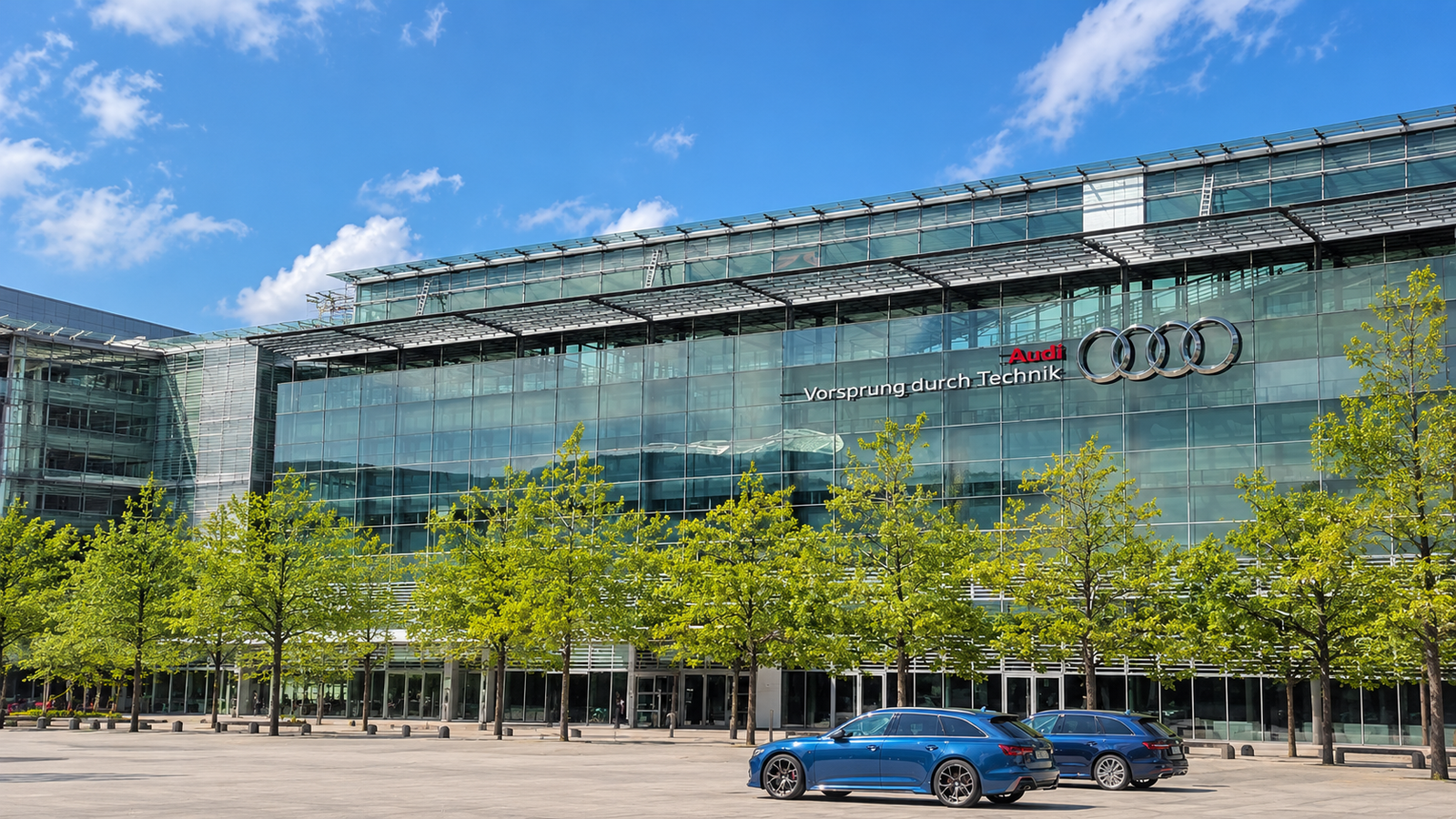
There was something I really wanted to do while living in Germany. I wanted to work at a German car company.
Germany is home to several world-famous car brands, and the automotive industry plays a major role in the country’s economy. I was curious about how these companies actually worked, how people inside them approached their jobs, and how they managed their projects.
So I applied to several car companies and eventually got an internship at Audi, where I worked for about six months.
I was really happy when I got the offer. I moved to Ingolstadt, a small city in southern Germany, for the internship. I also hoped that, if things went well, I might have a chance to work there full-time after graduation.
But once I actually started working there, I realized that the reality was quite different from what I had imagined.
I Decided to Do a Voluntary Internship in Germany
In Germany, an internship is called a Praktikum. There are two main types: mandatory internships (Pflichtpraktikum) and voluntary internships (freiwilliges Praktikum).
Some German universities and degree programs require students to complete an internship before graduation. A voluntary internship, on the other hand, is something you choose to do even if it isn’t part of your degree requirements.
I didn’t need an internship to graduate. But I wanted to gain some real work experience before looking for a full-time job.
Working at a German car company was also on my personal bucket list.
So I started looking for internship openings at Mercedes-Benz, BMW, Porsche, Audi, and other car companies.
I began checking job postings regularly about six months before I wanted to start. Not every department was hiring interns all the time, so finding the right opening at the right time was important.
I Got Rejected by BMW and Mercedes-Benz, Then Rewrote My CV
At first, BMW and Mercedes-Benz were the companies I wanted to work for the most. But both rejected my applications at the CV screening stage.
Around that time, I also heard from people around me that good grades were important. Of course, the actual hiring criteria probably varied depending on the company and department.
Anyway, applying didn’t cost anything, and I had nothing to lose by getting rejected. So I kept applying wherever I could.
Then I started looking at my CV again.
Until then, I had been writing it around the skills and experiences I wanted to show. But from the company’s perspective, wasn’t it more important to see whether I could do the work they needed?
So I rewrote almost my entire CV.
I moved my most relevant work experience to the top. I highlighted the parts of my background that connected to the automotive industry or the projects I was applying for, and I included specific numbers whenever possible.
I focused on my actual work experience, removed less relevant information, and tried to keep my CV within two pages.
I hadn’t created any new experience. I had simply rewritten what I already had from the perspective of what the company was looking for.
After making those changes, I slowly started getting more interview opportunities.
Audi invited me to two online interviews.
The questions weren’t very different from those I had been asked in other German job interviews. They asked about my previous experience, why I wanted the internship, my interest in the automotive industry, and when I would be available to work.
From what I could tell, they seemed to value not only professional knowledge but also a willingness to learn and a strong work ethic.
An internship doesn’t last very long. By the time you’ve learned the job and adjusted to the workplace, a big part of the internship is already over. So they probably needed someone who could learn quickly and get involved.
And eventually, I got the offer.
Ingolstadt, the City of Audi
Audi’s headquarters are in Ingolstadt, in the southern German state of Bavaria.
I was living in Hamburg at the time, so I had to find a room for the internship.
At first, I assumed that living in a smaller city would be cheaper. But the rent was more expensive than I expected and wasn’t much different from what I had paid in Hamburg.
At the same time, I felt that the city had far fewer amenities and things to do.
Of course, Ingolstadt has historic buildings and places worth visiting. But from my experience of living there, Audi had such a strong presence in the city that it felt like there wasn’t much to do outside of anything related to Audi.
To me, it felt like an expensive small town.
Still, none of that mattered much to me at the time. I had finally gotten the chance to work at a German car company, and I was excited about what I might experience there.
I was also hoping for a full-time job.
I thought that if I worked hard during the internship and showed what I could do, maybe I would get an opportunity to stay after graduation.
But that hope started to fade on my very first day.
My Hopes of Getting a Full-Time Job Faded on Day One
As soon as I joined the company, I heard about the difficulties the organization was facing at the time.
There were concerns inside the company about what might happen next, and it was difficult to expect any new full-time positions in the organization I had joined.
I had thought that if I worked hard during my internship, another opportunity might come along. But there weren’t really any positions available in the first place.
To be honest, I lost a lot of motivation.
That didn’t mean the internship itself had become meaningless. Gaining real work experience and learning new things were still valuable.
But I had imagined building the next stage of my career at this company, so I was disappointed.
Ingolstadt also didn’t seem like a city with many other job opportunities for me. If there was no chance of staying at Audi, would I have any reason to remain there after the internship?
I had barely started working, and I was already thinking about Plan B.
What Was Happening in the German Automotive Industry at the Time?
Looking back, the uncertainty I felt inside the company was also connected to the difficulties the German automotive industry was facing at the time.
2024 was not an easy year for the German automotive industry.
According to the German Association of the Automotive Industry (VDA), total revenue in the German automotive industry fell by around 4% compared with the previous year.
Audi was also going through a difficult period.
According to Audi’s full-year results for 2024, which were published later, worldwide vehicle deliveries for the Audi brand fell by 11.8% compared with the previous year. Deliveries in China dropped by 10.9%.
Audi Group’s operating profit also fell from around €6.28 billion in 2023 to approximately €3.9 billion in 2024.
Of course, these challenges weren’t limited to Audi.
German car companies were dealing with several issues at the same time, including the transition to electric vehicles, competition from Chinese car manufacturers, production costs, and profitability.
China had long been an important market for German car companies, but competition from local Chinese manufacturers was becoming increasingly intense.
I could also sense concerns about the Chinese car market and growing competition inside the company.
From the outside, I had mostly thought about the technology and reputation of the German automotive industry. But from the inside, I could see the pressure of competition and change much more closely.
Of course, I can’t say that the difficulties facing the entire industry directly determined the hiring situation in my organization. The figures above are background information I checked later, after the annual results were published.
What Did I Actually Do at Audi?
I worked in an organization that supported IT and data-related projects.
Rather than having one team working together on a single project, different people were responsible for their own projects.
I supported the operations of one of the larger collaborative projects.
The project involved people from different departments, and large meetings and workshops were held regularly.
I helped prepare these events by creating presentation slides, coordinating schedules, and organizing the necessary documents.
I also looked for ways to make the project website easier to understand and suggested ideas for improving existing work processes.
Most of my work involved supporting an ongoing project and helping things run smoothly.
To be honest, it wasn’t glamorous work. There was a lot of documentation, and I spent plenty of time preparing materials for meetings.
Still, it was interesting to see up close how a large project was actually managed.
But there were also things I found disappointing.
Working at a Famous Company Doesn’t Always Mean You’ll Learn Great Things
One of the biggest things I realized during my internship was how much the experience could depend on the people you worked with.
Some of the people I worked with were very capable, and there was a lot I could learn from them.
But those people were usually extremely busy. Even when I wanted to learn more, they often didn’t have enough time to teach me.
On the other hand, there were also many times when I was mainly given relatively simple documentation tasks.
I spent a lot of time turning complicated internal systems and procedures into visual materials.
The company’s internal systems were much more complicated than I had expected. I heard that it could take a long time for new employees to understand where to find things and which procedures to follow.
So I created materials to make the existing systems and workflows easier to understand.
I don’t think that kind of work is meaningless. Making complicated information easier to understand is definitely important.
But sometimes I wasn’t sure who would actually use those materials or what would change once they were finished.
I wanted to gain more hands-on project experience, but at times it felt like creating documents had become the purpose of the work itself.
I also learned how important it was to take initiative as an intern.
In the German work environment I experienced, it was important not to just wait for someone to give you tasks. Asking questions, looking for things that needed to be done, and suggesting improvements were all important.
This was especially true for interns who were only there for a short time. If you simply sat around waiting, you could eventually run out of work and risk getting a poor evaluation.
It Wasn’t the Big Company I Had Imagined
Another thing that surprised me at Audi was how old-fashioned the company felt in some ways.
Because it was such a famous car company, I had expected its internal working environment and systems to be quite advanced.
But a lot of the office equipment I used was old, and the work processes were complicated.
I was also surprised by how much time it could take for a new employee to understand the company’s systems and really get started with their work.
The atmosphere was different from what I had expected, too.
In the environment I experienced, there seemed to be a high proportion of male employees, and it wasn’t easy to naturally fit in with colleagues who had worked there for many years.
People could be very direct in the way they spoke, and there were times when certain comments or attitudes made me uncomfortable as a foreigner.
Of course, I can’t judge the whole of Audi based on the department and people I worked with. In a company this large, the way people work and the atmosphere can vary a lot between teams.
But at least in the environment I experienced, it didn’t feel like a young, dynamic organization that quickly embraced change.
People seemed used to maintaining existing systems and procedures. Changing the way things were done often took a long time, and there didn’t seem to be much interest in doing things differently.
Did Having Audi on My CV Help Me Find My Next Job?
I think it did.
Audi is a company almost everyone knows, and having that name on my CV definitely helped my experience stand out. But I don’t think I received positive feedback simply because I had worked at Audi. My previous work experience, how I had adapted to a new environment, and how I explained those experiences probably mattered too.
More than anything, the internship changed the way I looked at companies.
Before, getting into a famous company had been a goal in itself. But after actually working there, I realized how different the experience could be depending on who you worked with and what kind of work you were given.
There were people I could learn a lot from, but there were also moments when I wondered why I was doing certain tasks and felt like I was wasting my time.
My time at Audi wasn’t quite what I had expected, but it helped me understand a little more clearly what kind of work I wanted to do and what kind of environment I wanted to work in.
Why I Still Recommend Doing an Internship
I still recommend doing an internship.
Especially when you’re just starting your career, I think it’s important to experience different companies and different kinds of work. It’s hard to know what you’re good at and what you enjoy until you’ve actually tried it.
And a big company isn’t always the right answer. In fact, because responsibilities are often divided into very specific roles, the range of work you get to experience can sometimes be limited.
That’s why I think internships are a great opportunity. Compared with taking a full-time job, you can experience a company’s atmosphere and actual work with relatively less commitment. And if it doesn’t feel right, you can choose a different direction. That experience can also help you when applying for jobs later.
Rather than trying to find the perfect answer right at the beginning of your career, I think it’s worth taking different opportunities and figuring out which direction suits you along the way.