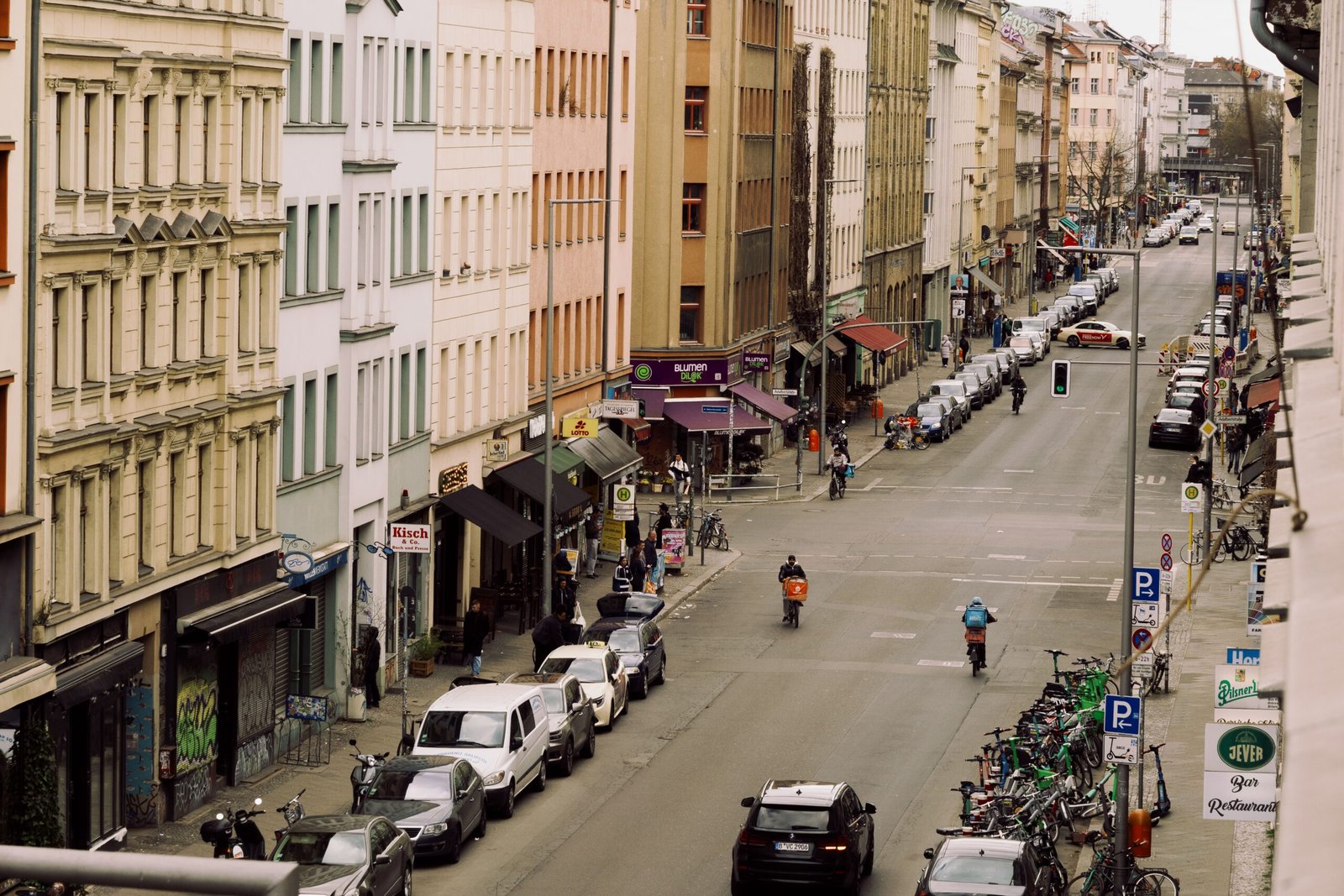
Before moving to Germany, I thought it would be difficult to become friends with Germans.
That was because I’d learned about some of the cultural taboos in Germany from my language school teacher and things I’d read online.
Some of the main things I was told were: never ask about Hitler, don’t ask people how much they earn or how much they pay in rent, and avoid asking about someone’s age or anything too personal.
Hearing all this made me wonder about one thing.
Then what are you supposed to talk about if you want to get to know someone?
In Korea, questions about someone’s age, job, family, or relationship can naturally come up when people are getting to know each other. Of course, some people in Korea find these questions uncomfortable too. But at the time, asking questions about someone seemed like a normal way to start a conversation.
So when I heard that I should be careful about asking these things in Germany, I felt as though there was already an invisible wall between people.
Even before arriving in Germany, I expected that building relationships with Germans wouldn’t be easy.
I went on to spend several years in Germany, studying at university and later working there.
During that time, I found that some of the things I’d heard before moving were true, while others were different from what I expected.
There were also rules that I’d rarely seen mentioned online but that felt much more important in everyday life.
Is Talking About Hitler Really Completely Taboo?
One of the things I heard most often before moving to Germany was about the Nazis and Hitler.
I was told that Hitler was a subject you should never bring up with Germans.
In my experience, the topic never came up at work. There wasn’t much reason to discuss such a sensitive part of history in a professional setting anyway.
But conversations with friends were a little different.
Sometimes we would be talking about historical events or social issues, and the conversation would naturally lead to the Nazi period. In those situations, we could talk comfortably about historical facts and what had happened at the time.
What particularly surprised me was how much most of my German friends knew about Hitler and that period of history. They remembered details, including specific years.
They told me that German schools teach this history thoroughly so that people don’t forget it, even though it’s not a part of their country’s past they are proud of.
I thought that was something worth learning from.
Of course, I never approached a German person I’d just met and suddenly started asking questions about Hitler.
Germany’s historical responsibility is something that needs to be treated seriously. But that doesn’t mean every conversation about its history is completely forbidden.
In the end, what matters isn’t just the subject itself, but the context and the way you talk about it.
People Rarely Asked About Age or Appearance
One of the things that stood out to me most while living in Germany was how little interest people seemed to have in each other’s age.
My colleagues didn’t ask how old I was, and I often had no idea how old they were either.
In Korea, knowing someone’s age can affect how people speak to each other or how a relationship develops. But in Germany, not knowing a colleague’s age didn’t seem to matter at all when working together.
Of course, that doesn’t mean age is never mentioned.
During job interviews, I sometimes had interviewers casually mention their own age. But I didn’t have to share mine, and if I didn’t, nobody asked again.
Salary was similar.
Even among close friends, people never asked each other how much they earned in my experience. At least in the relationships I had, salary was rarely a topic of conversation.
But something else stood out to me even more than age or money.
It was how little people seemed to care about other people’s appearance.
Whether someone had gained or lost weight, was wearing makeup, or looked particularly attractive that day, people generally didn’t feel the need to mention it.
I also rarely experienced conversations where people criticized someone else’s body or appearance behind their back.
That doesn’t mean people never give compliments.
If someone got a haircut, it was normal to say that their new hairstyle looked good. Or someone might say they liked an outfit and that it was their style.
But that felt different from commenting on someone’s weight or physical features.
I really liked this part of German culture.
I could go without makeup, have slightly messy hair, or wear whatever I wanted without worrying so much about what other people thought.
Not having to explain how I looked or feel judged for it made everyday life more comfortable and easier.
Even now that I’ve left Germany, it’s one of the things I miss most.
Surprisingly, People Talked Openly About Divorce in Their Families
I had been told to avoid personal questions in Germany, but I discovered that some personal topics were much easier to talk about than I’d expected.
Family relationships were one example.
Most of the friends I met had grown up with divorced parents. Some had stepparents or half-siblings.
What interested me was how naturally they talked about it.
When family came up in conversation, they didn’t seem to feel the need to hide the fact that their parents were divorced or explain it carefully in case someone felt uncomfortable.
They would mention a stepfather or stepmother as naturally as any other family member.
At first, I remember not knowing how to react.
If someone told me their parents were divorced, should I look sympathetic? Should I avoid asking anything else?
But there was no need to react that way.
At least for the friends I knew, their parents’ divorce wasn’t necessarily something sad or shameful.
It was simply part of explaining what their family looked like.
After spending years in Germany, I realized that not every personal subject is sensitive in the same way.
You can talk about someone’s family situation when they bring it up naturally. But that doesn’t mean it’s appropriate to start asking detailed questions about family conflicts or private relationship problems.
I learned that the important thing wasn’t to avoid personal conversations altogether, but to recognize and respect how much someone wanted to share.
Table Manners Required More Attention Than I Expected
One of the everyday manners I paid the most attention to in Germany was making noise while eating.
The Germans I ate with were generally very quiet at the table.
Eating with your mouth open or making chewing noises was something people seemed careful to avoid.
I became very conscious of whether I was making any noise while eating.
Sometimes I felt I was paying almost too much attention to it.
Especially when I had a cold and couldn’t breathe properly through my nose, I sometimes found it difficult to figure out how I was supposed to breathe while eating.
That’s how strongly the habit of eating quietly stayed with me.
Of course, I don’t think every German has exactly the same table manners. But in the situations I experienced, avoiding chewing noises certainly felt like an important part of dining etiquette.
Keep the Noise Down on Sundays and After 10 PM
One rule I experienced repeatedly while moving between different apartments in Germany was the need to keep noise down at night.
Of course, this doesn’t mean you aren’t allowed to walk around your apartment, take a shower, or do anything at all.
It simply means being careful about things like playing loud music, turning up the television, or having a party.
Sundays required even more consideration.
Sunday is often called Ruhetag, a day of rest, when people generally keep things quiet and prepare for the coming week.
The buildings I lived in had rules about quiet hours and living together with neighbors. If someone didn’t follow them, neighbors could complain or even contact the police.
The exact rules can vary depending on the location and building.
Still, keeping quiet after 10 PM and respecting the peaceful atmosphere on Sundays were things I experienced consistently throughout my time in Germany.
Not Particularly Close, but Willing to Help: German Neighbors
Relationships with neighbors showed me a slightly different side of German life.
In buildings where older residents had lived for a long time, people sometimes took an interest in someone new moving in.
Some neighbors appreciated it when I introduced myself after moving in. It could make them feel safer to know who was living in the building rather than suddenly seeing an unfamiliar person around.
On the other hand, in apartment buildings with mostly younger residents or small studio apartments, it was perfectly possible to live without having much contact with neighbors.
One thing I found interesting was the parcel delivery culture.
When a parcel arrived and the person receiving it wasn’t home, the delivery driver would sometimes ask a neighbor to accept it instead.
At first, I found it a little strange.
Why would I take responsibility for someone else’s package?
But over time, I began to see how practical this system could be.
The delivery driver didn’t have to take the parcel to a separate collection point, and the person who ordered it didn’t have to make another trip to pick it up.
Of course, there were downsides.
Some neighbors would leave their parcels with me for days without coming to collect them.
In those cases, I sometimes decided not to accept their parcels again.
Experiences like these made me realize that relationships between neighbors in Germany weren’t necessarily cold or distant.
People could keep a certain distance from each other’s private lives while still helping one another in practical ways when needed.
Small German Manners and Superstitions
Living in Germany, I gradually became familiar with small social rules that I hadn’t known about before.
One example is how you address someone.
In German, Du is the informal way of addressing someone, while Sie is used in more formal situations.
In the workplaces I experienced, almost everyone used Du.
If an interviewer started speaking to me using Du, I could naturally use Du in return.
On the other hand, public-sector organizations and some more traditional or conservative workplaces sometimes used Sie, even during interviews.
When contacting government offices, insurance companies, or internet service providers, Sie was generally the normal choice.
At first, the difference might seem complicated. But once you pay attention to how the other person addresses you, it becomes fairly easy to understand.
Greetings were another small but important part of everyday life.
When entering a restaurant, a doctor’s waiting room, or a public office, it was natural to say a simple “Hallo” if you made eye contact with someone.
Asking whether a seat was available before sitting at a shared table was also basic etiquette.
Another thing I remember is the custom of not wishing someone a happy birthday in advance.
In Germany, there’s a superstition that wishing someone a happy birthday before the actual day brings bad luck.
So it’s better to wait until their birthday to congratulate them.
There was also an interesting custom when drinking alcohol.
When clinking glasses, people would look each other in the eye.
I also heard a funny superstition that failing to make eye contact would bring three years of bad luck to your sex life.
But I never really liked this custom.
I just wanted to clink glasses and enjoy my drink without having to think about making eye contact with everyone.
Of course, not all these customs are strict rules or taboos.
Some are everyday manners, while others are simply superstitions people follow for fun. The more I learned these little details, the more I felt that I was really living in the country rather than just visiting it.
The Unwritten Rules of German Workplaces
One of the things that stood out to me most about working in Germany was the boundary between work and personal life.
Fridays, in particular, felt quite different from what I’d experienced working in Korea.
In the organizations where I worked, important meetings were rarely scheduled after 2 PM on Fridays.
Many colleagues finished their work and left around 3 PM.
Friday often felt as though the weekend had already begun. The atmosphere was much more relaxed.
Taking holidays was also very flexible.
Whether someone took two weeks off or three weeks in a row, it was generally up to them as long as they coordinated their work schedule. People didn’t interfere much with how others chose to use their annual leave.
Relationships with managers were also fairly informal and equal.
If we went out for a meal, nobody was expected to arrange the manager’s cutlery or pour water for them.
People took care of their own things and were responsible for their own work.
I found this comfortable.
On the other hand, there were parts of German working culture that often frustrated me.
Documentation and procedures were a big one.
Problems that seemed as though they could be solved quickly through a short conversation sometimes had to go through several steps involving emails and documents.
There was a strong tendency to keep a written record of decisions and processes.
This had the advantage of making things structured and clear, but it could also make work move slowly.
When learning a new role, people generally gave you enough time.
Rather than expecting you to adapt immediately or do everything perfectly from the beginning, there was time to understand the work and get used to it.
I also didn’t mind receiving direct feedback from my managers.
Instead of complaining behind my back, they would tell me what the problem was and what I needed to improve.
In that sense, I found direct feedback helpful for my own development.
But not every experience with colleagues was positive.
Germany’s structured way of working certainly provided stability, but sometimes that same structure seemed to make change more difficult.
In the organizations I experienced, thorough reviews and established procedures often took priority over making quick changes.
Of course, I don’t think this describes every German company.
It’s simply one of the biggest differences I noticed while working there.
Are Germans Direct, or Are They Cold?
Germans are often described as direct.
In my experience, this was true to some extent.
If someone didn’t want something, people generally didn’t keep offering it. Once someone said no, their answer was accepted.
In Korea, people sometimes offer something again because they think the first refusal might have been out of politeness.
But in the everyday situations I experienced in Germany, people didn’t usually try to change someone’s answer.
There were advantages to this.
If I said no, it meant no, and people respected my decision.
But sometimes that attitude felt a little cold.
For example, if you’re standing alone at a gathering and feeling awkward, it’s better not to expect someone to come over, start a conversation, and naturally include you in the group.
Of course, there were people who were kind and welcoming. But compared with what I was used to, I felt that people were less likely to actively look after someone who was new or uncomfortable.
When I first arrived in Germany, situations like this felt awkward and difficult.
Over time, however, I became more used to the culture and started focusing more on myself.
Another thing I never really got used to was the humor.
Some Germans I met made sexual jokes or jokes that could sound racist depending on who was listening.
They might have thought those jokes were simply funny, but there were times when I felt uncomfortable.
That doesn’t mean every direct comment or uncomfortable joke I heard in Germany could be explained as a cultural difference.
Sometimes it was simply someone’s personality, and sometimes I genuinely felt that I was experiencing racism.
As a foreigner, it wasn’t always easy to know whether someone was naturally unfriendly or whether they were treating me differently.
Even after living in Germany for several years, there were still moments when I wasn’t sure where cultural differences ended and rudeness began.
Why It Was Difficult to Build Close Friendships in Germany
Perhaps the most difficult part of living in Germany wasn’t the bureaucracy or the language, but relationships.
In a country where personal independence is highly valued, I found that becoming close friends with Germans took a long time.
Friendships developed slowly through shared interests and spending time together.
At first, I thought it was simply a matter of time.
But even after becoming friends, I often felt that a certain distance remained.
When we met, we had a good time and enjoyed talking.
But if I didn’t contact them first, I often wouldn’t hear from them.
If I didn’t suggest meeting up, we sometimes wouldn’t see each other for a long time.
Eventually, some friendships simply faded, and we lost contact altogether.
Of course, not every German maintains friendships this way. And perhaps people becoming more comfortable spending time alone isn’t something unique to Germany.
Still, the relationships I experienced there felt much colder and more distant than those I’d experienced in other countries.
What interested me was that I wasn’t the only one who felt this way.
Other foreigners I met in Germany also talked about how difficult it could be to become close to Germans.
Perhaps that’s why I often became friends with people from other countries more quickly.
Many of my friends had moved to Germany from abroad or had an immigrant background. I think being able to understand each other’s experiences of living in a foreign country made it easier to connect.
I also experienced relationships developing slowly when dating in Germany.
Rather than defining a relationship immediately, people sometimes took their time getting to know each other and gradually becoming closer.
For some people, that pace might feel comfortable.
But for someone who values regular contact, sharing emotions, and being able to rely on each other during difficult times, it might take some getting used to.
One of the things I appreciated about Germany was how people respected each other’s private lives.
Not feeling the need to ask about someone’s age or salary, and not judging their appearance or lifestyle, made me feel comfortable.
But in personal relationships, that same distance felt different.
Respecting someone’s time and not expecting too much from others can be a way of showing consideration. Yet there were moments when those boundaries felt too high for me.
During my years in Germany, I learned how to spend time alone and respect my own personal space.
But sometimes I wondered:
Had I really started enjoying being alone, or had I simply become used to not expecting anything from other people?
Things I Wouldn’t Want to Experience Again in Germany
The biggest one is racism.
Some of the experiences I had in Germany made me feel smaller and less confident.
There were moments when someone’s words or behavior affected how I saw myself.
Whenever I felt I was being discriminated against, having to figure out how to understand or respond to the situation was exhausting in itself.
The unfriendly attitude and poor customer service I sometimes experienced were also things I never completely got used to.
When I contacted customer service, there were times when the person seemed more interested in explaining or defending their position than in solving the problem.
Sometimes, even when something had clearly gone wrong with the service, getting an apology was difficult.
What bothered me wasn’t just that the problem hadn’t been solved.
It was the feeling that I was somehow being treated as the difficult person simply for asking for help.
Of course, I also met people who were genuinely kind and helpful.
Throughout my time in Germany, I tried to understand the culture and adapt to it.
But I don’t think understanding and accepting every difference necessarily means you’ve adapted well.
Some things are worth learning and accepting. Others might simply never feel right for you, even after many years.
So What Should You Really Be Careful About in Germany?
After spending many years in Germany, I learned how to respect other people’s personal boundaries.
I experienced the freedom those boundaries could give me, but also the loneliness that sometimes came with them.
If I could tell someone moving to Germany one thing, it would be that understanding how much personal distance someone feels comfortable with is more important than memorizing a list of taboos.
At the same time, I don’t think you need to ignore your own feelings just to adapt to another culture.
Not everyone I met in Germany was cold, and not every friendship was difficult.
I still miss the German attitude of not judging people for their appearance or the way they choose to live.
But Germany was also a place where I often found it difficult to feel warmth in my relationships with others.
In the end, the biggest cultural difference I experienced in Germany wasn’t really about which questions you could or couldn’t ask.
It was about how close we can get to each other while still respecting each other’s lives.
Perhaps that was the question I spent the most time thinking about during my years in Germany.