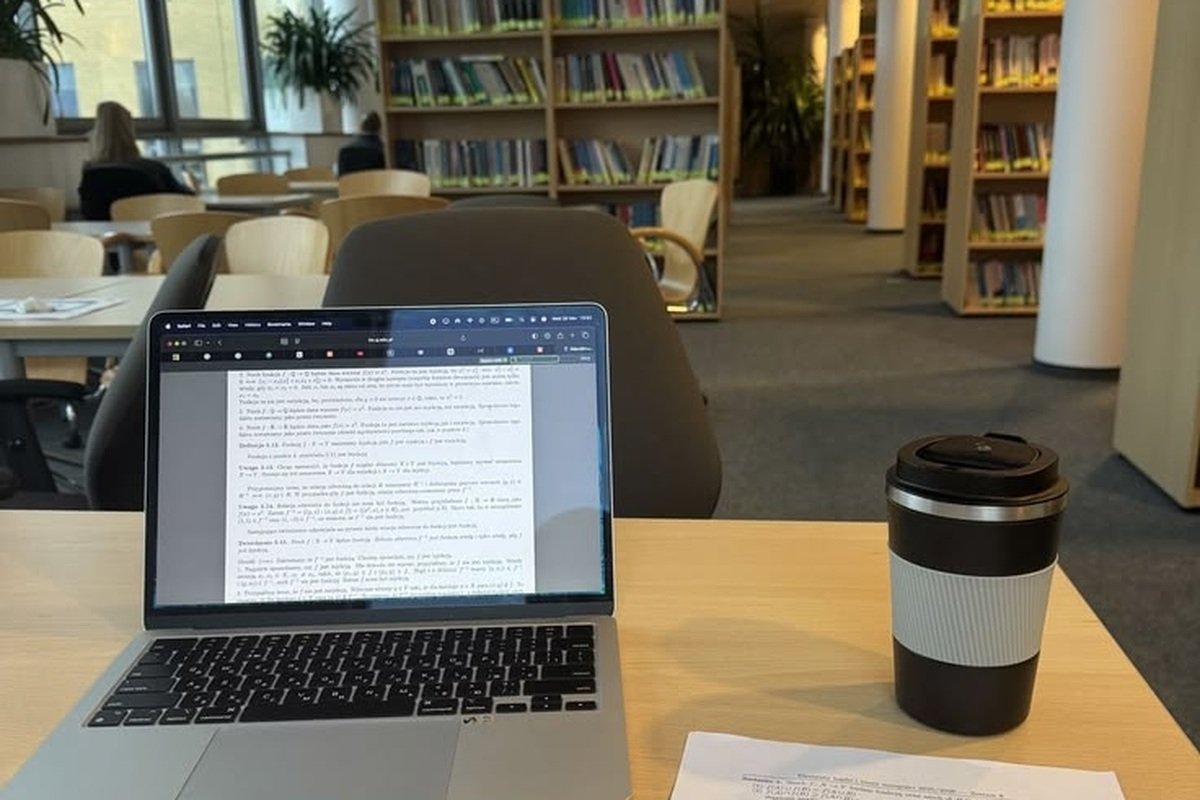
People often say that getting into a German university is easier than graduating from one.
Before I actually studied there, I did not fully understand what that meant. But from my first semester, I slowly started to understand why people said it.
After changing my field, I studied Business Informatics, or Wirtschaftsinformatik, at Universität Hamburg.
One thing I realized quite early was that studying hard only during the exam period was not enough.
At least in my program, last-minute studying did not really work.
Depending on the course, there were certain requirements you had to complete before you were even allowed to take the exam. There were also weekly exercises and assignments to keep up with. The number of exam attempts was limited too, so each exam felt more important than I had expected.
Because of that, I had one goal from the beginning.
If possible, I did not want to take the same exam twice.
I did not have any special study method.
Instead, I tried not to leave things until later. I reviewed the material again and again, and I kept checking what kind of questions actually appeared in the exams.
In the end, I passed all the exams in my bachelor’s degree on the first attempt.
Looking back, the result itself was not the most important part.
What mattered more was learning how to understand a system that was new to me and figuring out what I should not ignore.
Failing one exam felt more serious than I expected
In my program, most exams had a limited number of attempts.
For required courses, you had to pass the exam within the allowed number of attempts. If you used all your attempts and still did not pass, you could no longer continue the program.
For elective courses, there were sometimes other options.
But required courses were different.
You had to pass them.
That is why I never approached an exam with the idea of, “I will just try it once and see what happens.”
Once you fail, you have fewer chances left for the next attempt.
That alone can create a lot of pressure.
The timing of exams was also important.
At my university, there were different exam periods after the semester ended. If you did not take the exam during the first period, you could sometimes wait until the second one.
The problem was that the more I delayed an exam, the more my semester break disappeared too.
Especially in summer, there could be quite a long gap between the first and second exam periods. If I waited for the later exam, I could spend a large part of the summer still studying.
For some courses, if you did not finish the exam that semester, you might have to wait quite a long time for the next chance.
When several courses start piling up like this, graduation can also keep getting delayed.
So whenever possible, I tried to finish the courses I took in the same semester.
That became the starting point of the way I studied.
Übung was more important to me than the lecture
One of the things that felt unfamiliar when I first started university in Germany was the Übung.
For some of my math and other major courses, there was a separate exercise session in addition to the normal lecture.
During the lecture, the professor explained theories and concepts.
During the Übung, we worked on weekly problems and went through the solutions together with a Tutor.
I was not the kind of student who could listen to a lecture once and immediately understand everything.
Especially in the beginning, hearing unfamiliar technical words in German made following the lecture itself difficult.
Some days I honestly wondered if I had understood even 10 percent of it.
What helped me much more when preparing for exams was the Übung.
Concepts that felt very abstract during the lecture started to make more sense when I saw how they were actually used in problems.
Exam questions were also often connected to these exercises.
So if I was short on time, missing one lecture felt less serious to me than missing an Übung.
My basic rule was simple.
Understand this week’s problems this week.
I tried not to carry an unsolved problem into the next week.
Some courses had requirements before you could even take the exam
In some of the courses I took, there were certain requirements you had to complete before being allowed to take the final exam.
Depending on the course, you had to attend a certain number of Übung sessions or submit weekly assignments.
Sometimes we also had to work in groups and hand in our solutions together.
If you missed too many assignments or did not meet the attendance requirements, you might not be allowed to take the exam that semester.
In some courses, students also had to go to the board and solve a problem in front of the class.
We usually had to do this once or twice during the semester.
Of course, solving a difficult problem in front of other people was stressful.
So I tried to do it as early in the semester as possible.
The problems at the beginning of the semester were usually easier, and even if I could not solve everything perfectly, the Tutor sometimes helped me.
That gave me another small rule.
If I have to do it anyway, I should do it while it is still easier.
I looked for people to study with from the beginning of the semester
One thing I found very important during university was having people I could study with.
Especially in courses with group assignments, I tried from the beginning of the semester to work with people who seemed responsible and who followed the course regularly.
Maybe that sounds a little calculated.
But in reality, I think it helped both sides.
If I did not understand something, I could ask.
If the other person did not understand something that I knew, I could explain it.
During exam periods, we could also compare problems and study together.
When you study alone, sometimes you are not even sure if the way you understood something is correct.
Having someone you can ask immediately makes a bigger difference than I expected.
At a German university, nobody will step forward and take care of everything for you.
If you do not understand something, you have to ask.
If you need certain material, you have to find it yourself.
So I tried not to delay asking professors, Tutors, or people I studied with.
I did not let problems pile up until the exam period
This was probably the most important part of the way I studied.
I tried to understand what I learned that week before moving on to the next one.
If I did not understand something from week one and simply ignored it, week two could become even harder.
If I kept doing that for several weeks, I might not even know where my confusion started.
So when I found a problem I did not understand, I tried to solve it within that week.
Sometimes I asked someone I studied with.
Sometimes I asked the Tutor.
If necessary, I also asked the professor.
Often, asking someone was much faster than sitting alone with the same problem for hours.
Every four weeks, I reviewed everything again
Studying everything at once right before the exam did not work well for me.
Instead, I treated about four weeks as one study block.
In week four, I reviewed everything from week one to week four again.
In week eight, I went back through the earlier material again.
At first, this can feel like it takes a lot of time.
But by the end of the semester, I had already seen the earlier material several times.
So when the exam period started, I was not learning everything again from the beginning.
I was mostly reviewing and repeating things I had already seen before.
I collected as many Altklausuren as possible
Another thing I found very useful was Altklausuren.
These are exams from previous semesters.
Depending on the course, some were officially provided by the university, while others were shared between students.
I saved as many as I could find.
When the same professor had been teaching the course for a while, the style of the questions and the topics they considered important were sometimes similar from year to year.
As the exam got closer, I repeatedly solved the weekly exercises and the old exams.
I did not stop after solving them once.
If I got something wrong, I solved it again.
Then I came back to it a few days later and solved it again.
Some problems I repeated many times.
If something needed to be understood, I tried to understand it.
If something simply needed to be memorized, I memorized it.
It was not a special or sophisticated study method.
My goal was not to create an impressive study method.
My goal was to pass the exam.
If the grade looked strange, I went to Klausureinsicht
There was still something you could do after the exam results came out.
German universities have something called Klausureinsicht.
After the exam has been graded, you can go and look at your own answers and see how the points were given.
If you failed an exam or received a much lower grade than expected, I think it is worth going if possible.
Sometimes points can be missing.
Sometimes there may be an answer where you could have received partial credit.
I saw several cases where someone’s score changed after Klausureinsicht and they ended up passing the exam.
Of course, this does not mean going there and simply demanding more points.
It is a chance to understand why you received that grade and to check whether there was any mistake during the grading process.
In the end, my study method was not anything special
Looking back, what I did was quite simple.
I found people to study with from the beginning of the semester.
I took Übung seriously.
I tried to solve problems in the same week I learned them.
Every few weeks, I reviewed the earlier material again.
I solved as many old exams as I could find.
And once I decided to take an exam, I prepared with the goal of finishing it on the first attempt.
I was not a student who understood new things very quickly.
So I repeated them.
I did not leave things I did not understand until the exam period.
I did not try to fix everything at once right before the exam.
I solved the same problems again and again.
That method worked for me.
In the end, I passed all the exams in my bachelor’s degree on the first attempt.
But when I look back now, the biggest achievement was not really that result.
It was learning how to understand a system that was unfamiliar to me and finding a way to work within it that suited me.
German university does not suddenly become easy once you understand the system.
But once you know how it works, at least you know much more clearly what you need to prepare for.